
Armfield Ultra-High Temperature (UHT) and High Temperature-Short Time (HTST) Pasteurization
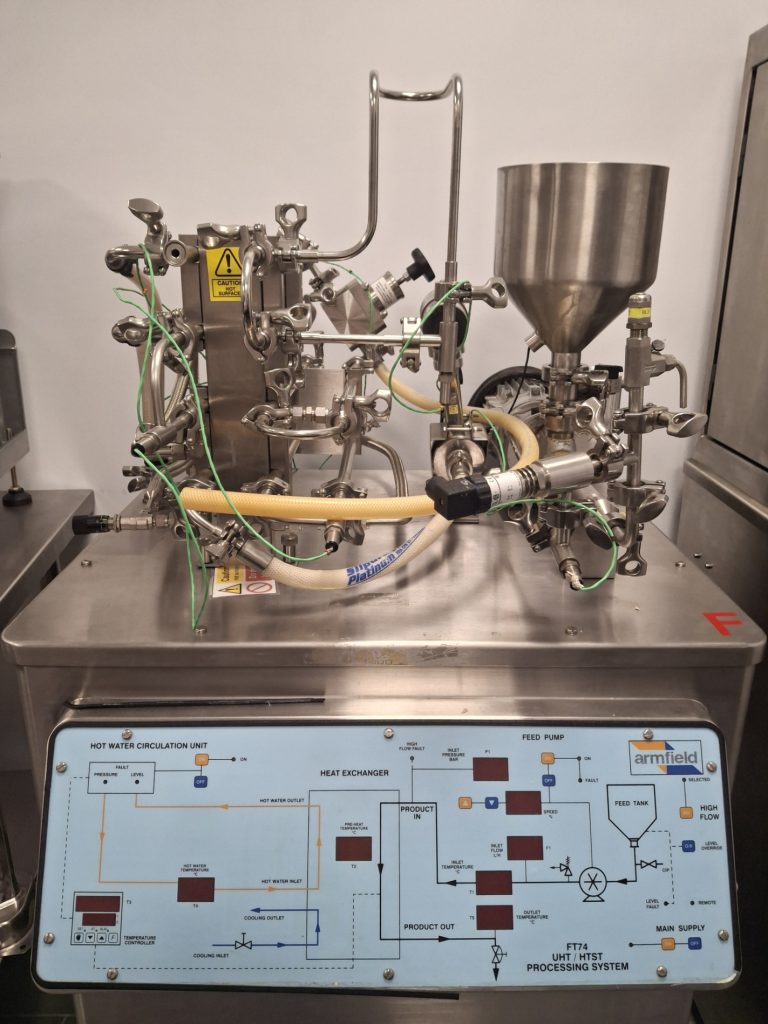
What is UHT Pasteurization?
UHT (Ultra High Temperature) pasteurization heats liquid products to 135°C to 150°C (275°F to 302°F) for 2-5 seconds. This process kills off bacteria and enzymes, enabling 6–9 months of shelf life at room temperature.
How UHT Pasteurization Works
- The product is first warmed to prepare it for the UHT process
- The product is heated rapidly through steam injection or indirect heating
- Immediately after heating, the product is cooled quickly to prevent overcooking and preserve flavor and nutrients
- The product is filled into sterile containers in a sterile environment. This prevents microorganisms from re-entering the product after processing.
Why Choose UHT?
- Longer shelf life
- No refrigeration required
- Highly efficient for large-scale production
- Reduced logistics and storage cost because it doesn’t require refrigeration
- Ideal for milk, cream, plant-based beverages, soups, liquid eggs
What is HTST Pasteurization?
HTST (High Temperature Short Time) pasteurization heats products to 72°C (161°F) for 15 – 20 seconds. This method is used for products that need to be served fresh.
How HTST Pasteurization Works
- The product enters a heat exchanger
- The milk is heated
- Immediately after heating, the product is rapidly cooled
- The product is packaged and kept refrigerated
Why choose HTST?
- Kills harmful bacteria
- Preserves taste
- Retains most of the nutritional value
- Extends shelf life while requiring refrigeration
- Ideal for milk, cream, some fruit juices, liquid eggs